
Mar 31, 2026
What do you do when a system that used to work… stops working?
We ran into that question back in 2006.
While looking through our website stats recently, I noticed something unexpected. The most downloaded item last month was a newsletter I wrote nearly 20 years ago.
When I reread it, it took me right back to that moment in time. At the time, it felt like I was just sharing a few behind-the-scenes updates.
Looking back now, I can see it was the beginning of a complete metamorphosis for our company. A radical change in how we build bikes, and how we think about serving our customers.
I thought now would be a good time to elaborate, share some historic photos,
and invite you in to see what it was all about.
What we changed back then still shapes every bike we build today.
That change? We stopped building bikes in batches and completely redesigned our shop to build one bike at a time, without sacrificing efficiency.
That newsletter talked about the software we were writing and the machines we were building. But the reality is, a single newsletter couldn’t fully capture how significant those changes really were.
Over the next few emails, we will take a deeper dive into that transformation so you can see what truly makes Rodriguez different.
Let’s start with the frame shop, and leave the software and fit system for later.
A quick look at how things worked in the frame shop before 2006:
Like most builders at the time, we batched frames by size. It was the “Henry Ford” approach - Set up a machine once and make multiple parts. In theory, it saved time.
But as our models expanded and more customers wanted fully custom bikes, those batch sizes shrank from 10–12 at a time, down to 3–4. By 2006, a large percentage of our orders were custom. But those bikes couldn’t even be started until whatever batch was in progress was finished.
The efficiency disappeared and the mistakes increased. Mistakes are the most costly waste that can happen in manufacturing.
Who pays for mistakes and inefficiency? Answer: In the end, you do. Every cost of manufacturing ends up in the final price of the goods, and that includes reworks and inefficient processes. If not, then the company loses money and goes out of business.
By the summer of 2005, at least one bike per week was making it all the way through paint with an error that required a full rework and repaint. That's $$ down the drain.
And then, more importantly, there was the customer experience.
We told customers that their bikes would take 12–16 weeks to complete, but we rarely hit that timeline. It was frustrating for them, and just as frustrating for us.
Here’s one example:
In early 2006, we had over 20 custom bikes on order with deposits paid, but couldn’t start them for nearly three months because of a large batch that had been slowly moving through the shop.
That batch? A run of triple bikes (bicycles built for 3) that had been in process since November.
As custom orders piled up, that batch seemed to drag on forever.
When it finally ended, I’d had enough.
STOP THIS MADNESS!
One definition of insanity is doing the same thing over and over and expecting different results.
We needed a new way. We had to build bikes one at a time. No more batches.
Ever had to rethink a system that just wasn’t working anymore?
In early 2006 (almost exactly 20 years ago), I shut down the frame shop and gathered the team in my office to figure out what that would actually look like. We sat in large circle in the west side of the office, and I can still see the participants in my mind.
At first, they thought I was crazy. But as we started working through the problems, I could see the concept land for them. Ideas started flowing and then every person in the room contributed. What started as a crazy sounding idea quickly turned into a full-blown redesign of how we worked.
The core problem
If we built bikes one at a time, setup time would kill us.
We were using machines like “Pa Pa Bear” (a Bridgeport mill) for multiple processes. Each setup could take up to 15 minutes. And since multiple builders shared the same machines, there was also waiting time layered on top.
This wouldn't work.
The breakthrough
Eliminate setup time entirely.
Instead of re-configuring one machine over and over, we would use multiple machines—each permanently set up for a single task.
The next problem
Our shop is small.
Really small.
And no one made the kind of compact, precise machines we needed.
The solution
We built our own machines by ourselves.
Our greatest asset has always been the people at R+E Cycles. Once we committed to building our own machines, the creativity exploded. Sketches were flying. Ideas were everywhere. The 'Rare Birds' of the bicycle industry took flight. It was a whirlwind of pencils and paper.
I had a scale drawing of the shop, and before long it was a complete new layout filled with designs for every machine we would need to make one-at-a-time production work.
In the process, we discovered something unexpected:
Big machines like “Pa Pa Bear” weren’t just unnecessary, they were inefficient for what we were trying to do.
So we eliminated them from the process entirely.
Even movement was redesigned
We also looked at how much walking was involved in building a single frame.
The answer? At least a mile per bike.
That’s time. That’s labor. That’s money.
So we redesigned the layout of the shop to minimize movement. Machines were arranged in sequence, allowing a builder to move from one step to the next with almost no wasted motion.
What had once been a limitation (our small shop) became a major advantage.
Then came the leap
For three months, we stopped building bikes.
All we did was design and build machines (oh yeah, we did write the fit software too, but more on that later).
For 3 months, custom orders piled up.
We hoped we were building something better.
The result
When we flipped the switch and loaded the queue, everything changed.
Within a few months:
Build times dropped below 6 weeks.
Then to 4 weeks.
And stayed there for years!
Mistakes dropped to almost 0%...a real miracle.
Efficiency increased beyond what we thought possible.
And most importantly:
Customers got a better bike, delivered on time, and at a better price.
The Evolution of our Frame Building Method
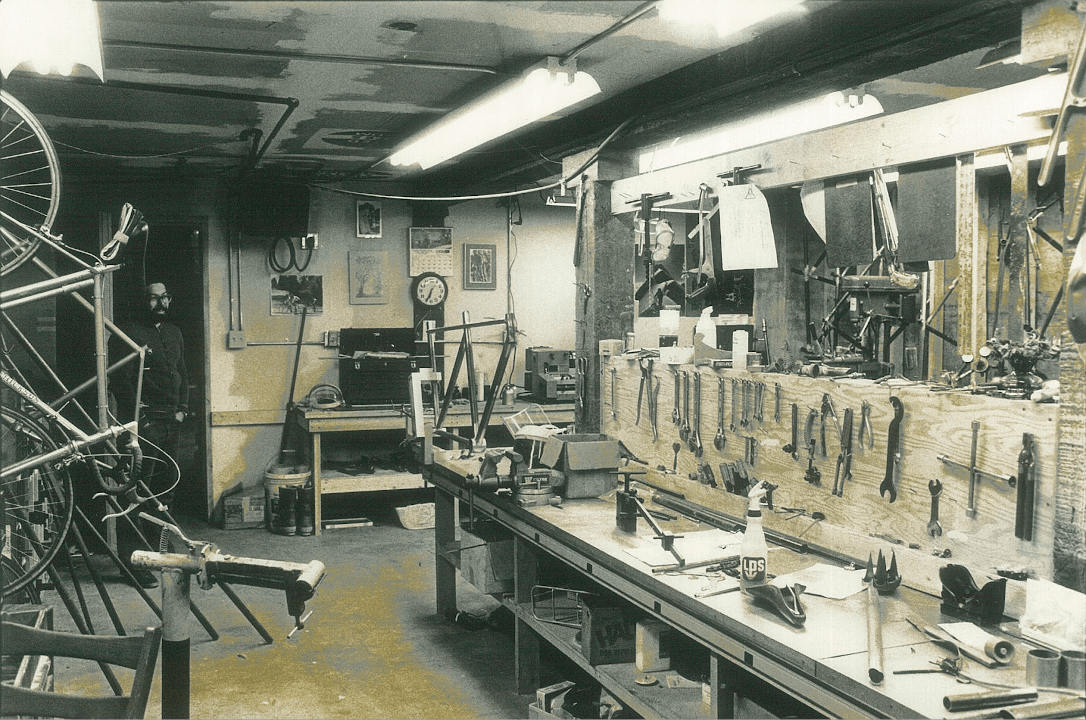
In the 1970's and 80's, big work benches, files, and hand tools were used for slow but steady builds.
circa 1978
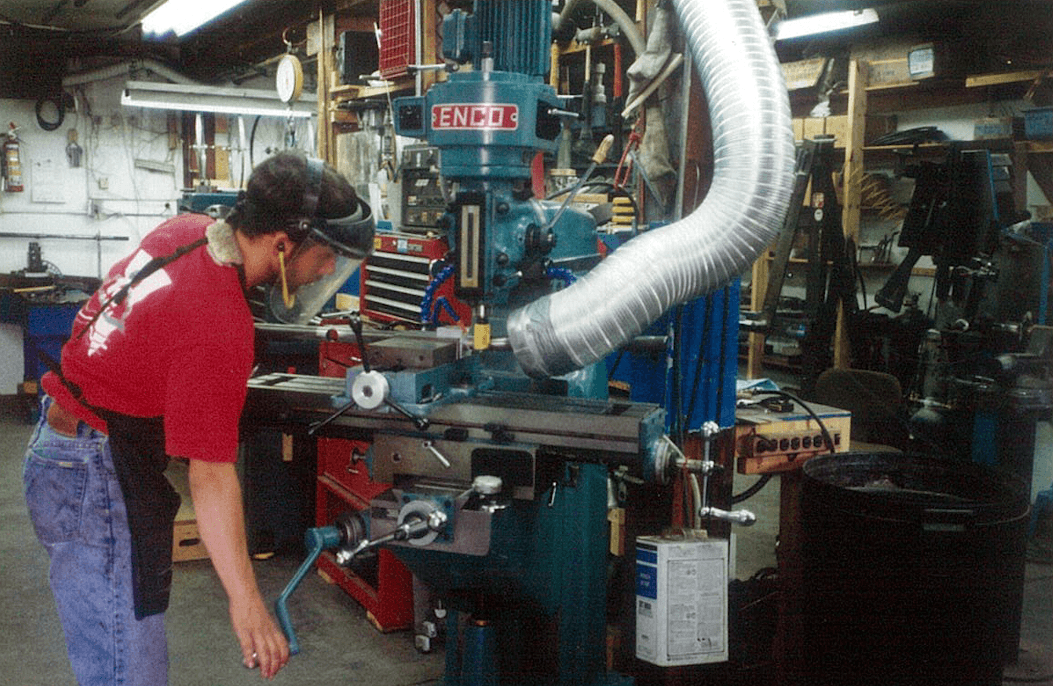
In the 1990's, big machines, work benches and mass production of small batches
were the order of the day.
circa 1998
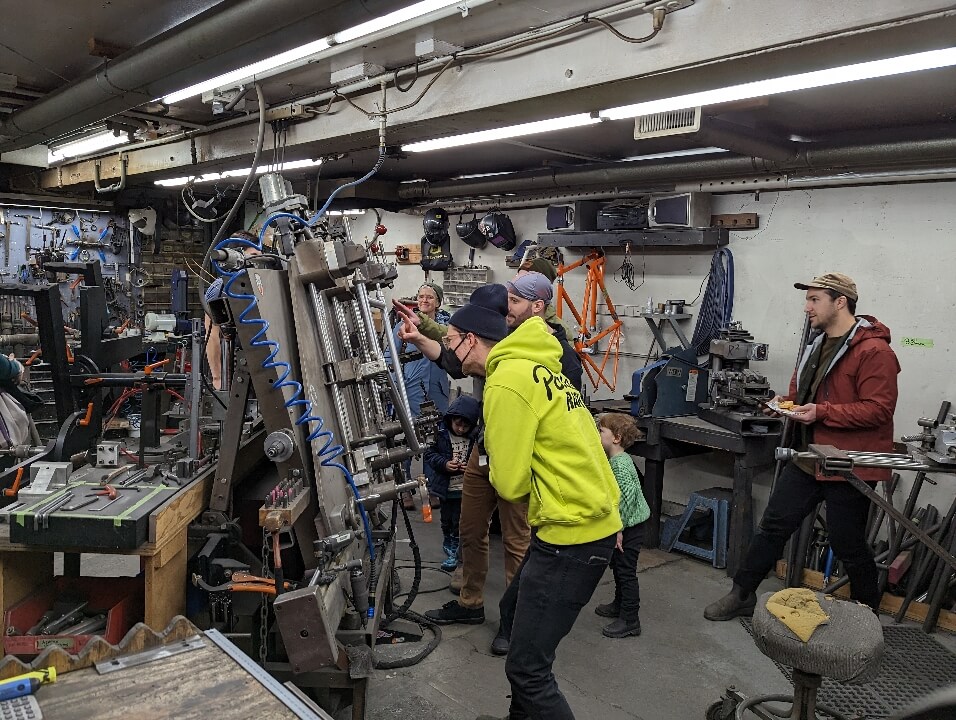
Our modern shop has an open layout with lots of smaller,
dedicated machines to build bikes one-at-a-time without the loss of efficiency.
From a recent shop tour - 2023
Why this still matters:
That wasn’t just a short-term improvement. It fundamentally changed our process of building bikes, and our view of customer service. We still practice these same values today. Every bike we build now traces back to that decision in 2006:
To stop batching… and start building one bike at a time, the right way.
It’s something that’s much easier to understand when you see it in person.
You're invited to join us for a shop tour:
Saturday, April 4
11:00 AM or 2:00 PM
Or the following weekend:
Saturday, April 11
11:00 AM or 2:00 PM
We’ll walk you through the process, answer your questions, and show you exactly how it all comes together.
(And yes, there will be coffee.)
Hope to see you there.
Dan
PS: if you want to read that old newsletter, it's right here

Bicycles Hand Built in Seattle Since 1973
5627 University Way NE Seattle, WA 98105


